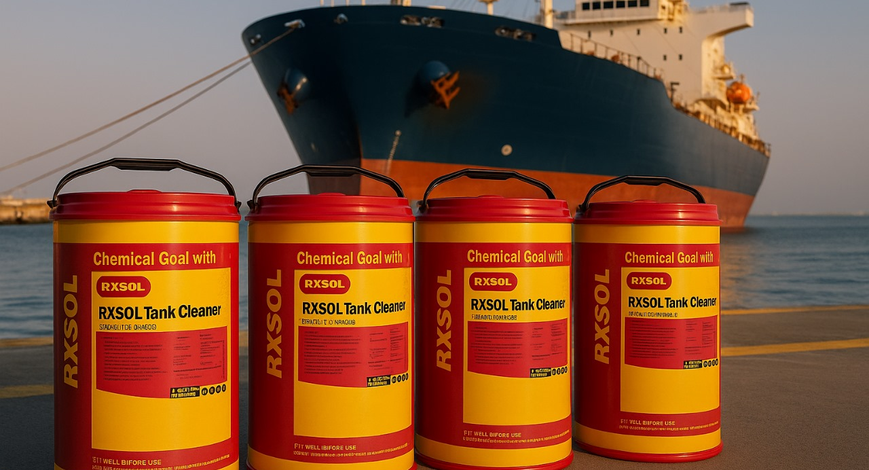
Electrolyte KOH Liquid 30 Percent
Part No: RXSOL-25-1024-030
Potassium Hydroxide Solution in Distilled Water suitable for Nickel Cadmium Batteries
Electrolyte KOH Liquid 30% – Potassium Hydroxide Solution
Electrolyte KOH Liquid 30% is a concentrated aqueous solution of Potassium Hydroxide (KOH) containing approximately 30% potassium hydroxide by weight. It is a strong alkaline electrolyte widely used in industrial water treatment, electrochemical systems, batteries, chemical processing, and specialty industrial applications.
Application
Applications of 30% KOH Liquid
1. Electrolyte Applications
KOH solution is widely used as an electrolyte because of its high ionic conductivity. It is used in selected alkaline electrolysis and electrochemical systems.
2. Hydrogen Production
Aqueous potassium hydroxide is used as an electrolyte in certain alkaline water electrolysis systems for hydrogen generation.
3. Battery Industry
KOH is used as an electrolyte in alkaline batteries and certain rechargeable battery technologies.
4. Chemical Manufacturing
It is an important raw material and processing chemical for manufacturing potassium-based chemicals, soaps, detergents, and other specialty products.
5. Water Treatment
30% KOH can be used for pH adjustment and alkalinity control in selected industrial water-treatment processes.
6. Industrial Cleaning
Because of its strong alkalinity, potassium hydroxide solutions can be used in appropriately formulated industrial cleaners and degreasers.
Dosage
30% KOH is highly corrosive and can cause severe burns to skin and eyes. It should be handled using appropriate chemical-resistant PPE, including gloves, protective clothing, and eye/face protection.
Store in compatible, tightly closed containers away from acids and other incompatible materials. When dilution is required, add KOH solution to water carefully and gradually, following the manufacturer's SDS and handling instructions.
Technical Specification
Key Product Information
-
Chemical Name: Potassium Hydroxide Solution
-
Common Name: Caustic Potash
-
Chemical Formula: KOH
-
Concentration: 30% w/w
-
Physical Form: Clear, colorless liquid
-
Nature: Strongly alkaline
-
Solubility: Completely miscible with water
-
Application: Electrolyte and industrial chemical
MSDS

| Product Name | Electrolyte KOH Liquid 30 Percent |
| Part Number | RXSOL-25-1024-025 |
Company Details:
RX MARINE INTERNATIONAL
105, A wing , BSEL , TECH PARK.
VASHI ,NEW BOMBAY 400703 INDIA
Branch : Kandla, Mumbai , Chennai, Vizag, Kolkata, UAE , OMAN , CANADA and KENYA
| Phone | +91 22 20871200 - 1400 |
| Fax | +91 22 27612100 :::AOH :0091 9821214367 |
| mail@rxmarine.com | |
| Website | www.rxmraine.com |

| Chemical Name | CAS No | EC number | Weight | Formula |
| Potassium hydroxide | 1310-58-3 | 215-181-3 | 56.11 g/mol | KOH |

| Classification of the substance or mixture |
Corrosive to metals (Category 1), H290 Acute toxicity, Oral (Category 4), H302 Skin corrosion (Category 1A), H314 For the full text of the H-Statements mentioned in this Section, see Section 16. |
| Signal Word |
Danger. |
| Hazard Statements |
H290 May be corrosive to metals. H302 Harmful if swallowed. H314 Causes severe skin burns and eye damage. |
| Precautionary statements response |
P234 Keep only in original packaging. P260 Do not breathe dust. P264 Wash hand thoroughly after handling. P270 Do not eat, drink or smoke when using this product. P280 Wear protective gloves/protective clothing/eye protection/face protection. P301 + P317 IF SWALLOWED: Get medical help. P301 + P330 + P331 IF SWALLOWED: rinse mouth. Do NOT induce vomiting. P302 + P361 + P354 IF ON SKIN (or hair): Take off immediately all contaminated clothing. Immediately rinse with water for several minutes. P304 + P340 IF INHALED: Remove person to fresh air and keep comfortable for breathing. P305 + P354 + P338 IF IN EYES: Immediately rinse with water for several minutes. Remove contact lenses, if present and easy to do. Continue rinsing. P316 Get emergency medical help immediately. P330 Rinse mouth. P363 Wash contaminated clothing before reuse. P390 Absorb spillage to prevent material damage. P405 Store locked up. P406 Store in corrosive resistant/ container with a resistant inner liner |

| General advice | Show this safety data sheet to the doctor in attendance. |
| If inhaled | Move to fresh air in case of accidental inhalation of dust or mists. Keep patient warm. In case of shortness of breath, give oxygen. Apply artificial respiration only if patient is not breathing or under medical supervision. No artificial aspiration mouth to mouth or mouth to nose. Use suitable instruments/apparatus. |
| Eye Contact | If the substance has got into the eyes, immediately wash out with plenty of water at least 15 minutes. Obtain medical attention. |
| Swallowed | Rinse mouth. After swallowing make victim drink water (two glasses at the most), call in physician. Do not attempt to neutralize. |
| Skin Contact | Remove contaminated clothing and wash affected skin with soap and water. Dab with polyethylene glycol 400. Obtain medical attention. |
| Most important symptoms and effects, both acute and delayed | The most important known symptoms and effects are described |
| Indication of any immediate medical attention and special treatment needed | No data available |

| Suitable extinguishing media | In adaption to materials stored in the immediate neighborhood. |
| Special hazards arising from the substance or mixture | Non-combustible. Ambient fire may liberate hazardous vapors. The following may develop in event of fire: potassium oxides. |
| Further information | Contain escaping vapors with water. Prevent fire-fighting water from entering surface water or ground water. |
| Advice for firefighters | Do not stay in dangerous zone without self-contained breathing apparatus. In order to avoid contact with skin, keep a safety distance and wear suitable protective clothing. |

| Personal precautions, protective equipment and emergency procedures | Evacuate personnel to safe areas. Do not breathe vapors or spray mist. Wear a positive-pressure supplied-air respirator, flame retardant antistatic protective clothing. Shut off leaks if without risk. Keep people away from and upwind of spill/leak. |
| Enviromental Precaution | Contain or absorb leaking liquid with sand or earth, consults an expert. Prevent liquid entering sewers, basements and workpits. If substance has entered a water course or sewer or contaminated soil, advise police. |
| Methods and materials for containment and cleaning | Spillage : soak up with inert absorbent material (e.g. sand, silica gel). Prevent liquid entering sewers, basements and workpits. Transfer to covered drums. Dispose of promptly. |
| Reference to other sections | For disposal see section 13. |

| Advice on safe handling | Provision of good ventilation in working area. The floor must be alkaline resistant. Do not leave container open. Avoid spillage. Do not transport together with incompatible substances. |
| Conditions for safe storage, including any incompatibilities | Keep tightly closed in a dry, cool and well-ventilated place. Keep out of direct sunlight and away from heat, water and incompatible materials. Requirements for containers, no metal containers. |
| Specific end use(s) | Apart from the uses mentioned in section 1.2 no other specific uses are stipulated. |

| Appropriate engineering controls | The product should only be used in ventilation hoods and fans |
| Eye/face protection | Goggles giving complete protection to eyes. |
| Body Protection | Complete suit protecting against chemicals. The type of protective equipment must be selected according to the concentration and amount of the dangerous substance at the specific workplace. |
| Skin protection | Chemical resistant apron / corrosive protective clothing, heavy duty work shoes. Handle with gloves - Full contact wears gloves from nitrile rubber material. - Splash contact wears gloves from nitrile rubber material. The select protective gloves have to satisfy the specifications of EU Directive 89/686 EEC and standard EN 374 derived from it. |
| Respiratory protection | In case of insufficient ventilation, wear suitable respiratory equipment. Required when vapor/aerosols are generated filter P2 ( |
| Control of environmental exposure | Prevent liquid entering sewers, basements and workpits. |

| Physical state | Liquid |
| Colour | Colorless |
| Odour | Odorless |
| Odor Threshold | Not Applicable |
| pH | >13.5 at 20ºC |
| Melting Point | Not Available |
| Boiling Point | Not Available |
| Flash Point | Not Available |
| Evaporation Rate | Not Applicable |
| Flammability (solid, gas) | No data available |
| Explosive limits | No Data Available |
| Upper/lower flammability or explosive limits | No data available |
| Autoignition temperature | Not Available |
| Decomposition temperature | No data available |
| Vapour pressure | No data available |
| Density | 1.28 g/ml at 20ºC |
| Vapour Density | No Data Available |
| Freezing point | No data available |
| Specific Gravity | No data available |
| Partition coefficient | No data available |
| Explosive properties | No data available |
| Solubility | Not Available |
| Relative density | Not Available |
| Ignition temperature | No information available. |
| Particle characteristics | No data available |
| Viscosity | No data available |

| Reactivity | Exothermic dissolution process with water. |
| Stability | Stable under recommended storage conditions. |
| Possibility of hazardous reactions | Risk of explosion in contact with fluorine, aluminium hexachloroplatinate/heat, bromoform + crown ether, but-2- ene-1,4-diol (heat), calcium powder, calcium carbide/chlorine, chlorine dioxide, cyanogen azide, 1,2- dichloroethene, magnesium, sodium azide + benzoyl chloride, nitrobenzene, nitroethane, nitromethane, nitroparaffines, N-nitrosomethylurea, phosphorus, nitrogen trichloride, tetrahydrofurane (peroxide containing), 2,4,6-trinitrotoluene, zinc, tin. The substance can react dangerously with acids, water, hydrogen peroxide, acetonitrile, acrolein, aldehydes, aluminium carbide, ammonium salts/ammonia, chloroform/methanol, cyclopentadiene, acetic acid, germanium, halogenated hydrocarbons, iodine pentafluoride, potassium peroxodisulfate, cresols, maleic anhydride, itrophenol, phosphorus trioxide, hydrogen sulfide, tetrafluoropropanol, trichloroethene, vinyl acetate, sugars (reducing). |
| Conditions to avoid | Not Available |
| Incompatible materials | For incompatible material see Section 10.3. |
| Hazardous decomposition products | Potassium oxides (Hazardous decomposition products from under fire condition) |

| Acute toxicity | Not Available |
| Skin corrosion/irritation | Burns |
| Respiratory or skin sensitization | No data available |
| Serious eye damage/eye irritation | Burns. Risk of blindness. |
| Germ cell mutagenicity | No data available |
| Specific target organ toxicity - single exposure | The substance or mixture is classified as specific target organ toxicant, single exposure, category 3 with respiratory tract irritation. |
| Specific Target Organ Toxicity – Repeated Exposure | No data available |
| Aspiration Hazard | May be fatal if swallowed and enters the airways. |

| Persistence and degradability | No data available |
| Bioaccumulative potential | Not Available |
| Toxicity | Not Available |
| Mobility in soil | Not Available |
| Results of PBT and vPvB assessment | PBT/vPvB assessment not available as chemical safety assessment not required/not conducted. |
| Other adverse effects | Harmful effect on aquatic organisms. Toxic effect on fish and plankton. Harmful effect due to pH shift. Forms corrosive mixtures with water even if diluted. Does not cause biological oxygen deficit. Neutralization possible in waste water treatment plants. Do not allow to enter waters, waste w |

| Product | There are no uniform EC Regulations for the disposal of chemicals or residues. Chemical residues generally count as special waste. The disposal of the latter is regulated in the EC member countries through corresponding law and regulations. We recommend that you contact either the authorities in charge or approved waste disposal companies which will advise you on how to dispose of special waste or burn in a chemical incinerator equipped with an afterburner and scrubber but exert extra care in igniting as this material is highly flammable. Obser |
| Contaminated packaging | Disposal in compliance with official regulations. Handle contaminated packaging as hazardous waste in the same way of the substance itself. If not officially specified differently, non-contaminated packaging may be treated like hou |

| UN number | 1814 |
| UN proper shipping name |
POTASSIUM HYDROXIDE, SOLUTION |
| Transport hazard class(es) | 8 |
| Packaging group | II |
| Environmental hazards | No |
| Special precautions for user | Yes |
| Further information | No data available |

| Safety, health and environmental regulations specific for the product in question | This material safety data sheet complies with the requirements of Regulation (EC) No. 1907/2006. |
| Other regulations | No data available |
| Chemical Safety Assessment | For this product a chemical safety assessment was not carried out. |

| Other Information |
The information above is believed to be accurate and represents the best information currently available to us. However, we make no warranty of merchantability or any other warranty, express or implied, with respect to such information, and we assume no liability resulting from its use. Users should make their own investigations to determine the suitability of the information for their particular purposes. In no event shall be liable for any claims, losses, or damages of any third party or for lost profits or any special, indirect, incidental, consequential or exemplary damages, how so ever arising, even if Rx Marine International has been advised of the possibility of such damages. |