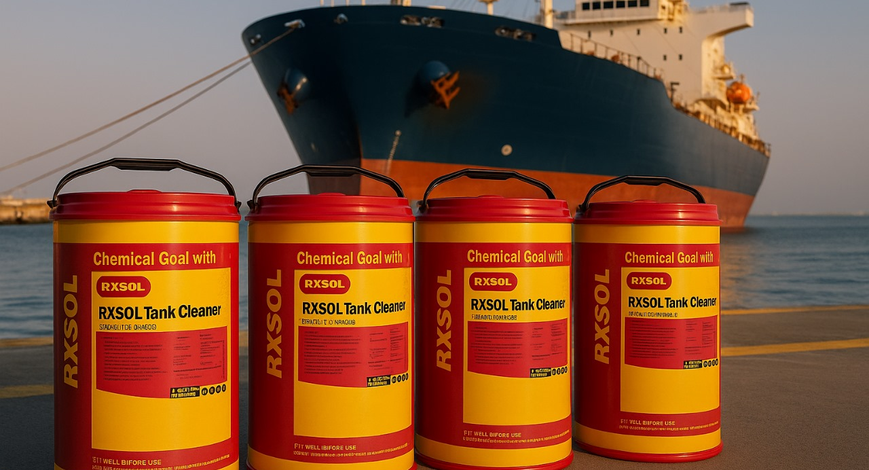
ADJUNCT Hardness Controller
Part No: RXSOL-25-5006-025
Boiler Water treatment chemicals Used as a SCALE CONTROLLER to prevent the formation of calcium scale and other mineral deposits in low-, medium-, and high-pressure boilers.
Hardness Control is a white dry powder Phosphate Boiler Water Treatment product used for the reduction of hardness in boilers. Hardness Control is highly soluble in water and It will precipitate calcium hardness as a non-adherent sludge. Disodium phosphate pure neutral grade used in BOILER with other Boiler Water treatment chemicals concentrated alkaline liquid to prevent calcium scale deposits.
Application
Hardness Control is formulated to form a precipitate with calcium ions which will not adhere to metal surfaces but are in a form suitable for blowdown. Disodium phosphate as a scale controller used in lowpressure boiler systems (0-32 bar) and medium-pressure steam propulsion vessels (32-60 bar) also in boiler water treatment program for highpressure steam generating systems (60-84 bar).
Used for boilers and water softening.
Formation of Calcium Sulfate is main cause for SCALE formation :::
The principal problem potential posed by sulfate ions in water is the possibility of calcium sulfate scale formation. Precipitation of calcium sulfate can occur when high concentrations of both calcium and sulfate exist simultaneously. There are three primary areas of water treatment in which calcium sulfate precipitation may occur boilers, cooling systems, and ion exchangers operating in the hydrogen or acid mode.
In boilers, calcium sulfate scale formation has been reduced to a minimum by modern treatment practices. The low hardness levels largely preclude calcium sulfate boiler scale. By contrast, cooling systems are subject to calcium sulfate scale deposition because the makeup is usually not treated for hardness removal. Cooling water is usually treated with sulfuric acid for pH control, and the makeup is cycled, i.e. concentrated. Calcium sulfate scale deposition can result unless the cycles of concentration are properly controlled in conjunction with the proper use of scale control chemicals. Cation ion exchangers regenerated with sulfuric acid also can pose a major calcium sulfate problem. Calcium sulfate precipitation can be avoided by controlling the acid concentration and the flow rate through the exchanger.
Sulfate content can be calculated in Laboratory by using this method ::: http://rxmarine.com/SULFATE-TEST-KIT
Dosage
For optimum results dose Hardness Control direct to the boiler via the bypass pot-feeder. The dry powder should be dissolved in hot water (50°C) at a ratio of 1 part powder to twenty parts condensate (e.g. 500 grams/10 litres). Ensure that treatment is fully dissolved before dosing.
This treatment dosed at 1.49 grams per ton of distilled water provides 1.0 ppm phosphate.
Feed Points: Dose with other BOILER CHEMICAL/alkaline liquid by diluting withcondensate and feed directly into the system drum (below the water level) using a bypass pot feeder. For low-pressure boilers, It may be dosed to the hotwell or condensate return tank, although this is not the preferred method.
Dosage and control
|
Phophate test result in pPM PO4 |
|||||||
|
Pressure |
0 - 10 |
10 - 20 |
20 - 30 |
30 - 40 |
40 - 50 |
> 50 |
Control range |
|
0-40 Bar |
23 |
11.5 |
Satisfactory |
Satisfactory |
Blow Down |
20-50 |
|
|
41-60 Bar |
17 |
5.5 |
Satisfactory |
Blow Down |
Blow Down |
15-30 |
|
|
> 60 Bar |
5.5 |
Satisfactory |
Satisfactory |
Blow Down |
Blow Down |
10-25 |
|
Select row on righthand side for applicable pressure range. Compare test result with comment in table and dose stated amount of product per ton boiler water volume.
These are recommended values based on experience and are in no way intended to replace the boiler manufacturer's specifications or company regulations.
Technical Specification
The use of Disodium phosphate treatment in BOILER converts calcium hardness into soft, non-adherent sludge that is easily removed by blowdown.
Sampling And Testing
A sample of boiler water should be drawn for analysis daily. The sample should always be taken from the same point after blow down, cooled and tested immediately. Follow the Rxsol Hardness Test Kit instructions and fill the Boiler Water Log Form according to result results. It is important that regular testing is carried out to ensure levels of treatment are correct.
Physical Properties :
Appearance :White powder
Corrosive action :NonE
pH 1% solution :8.8
Flash point :None
MSDS

| Product Name | : | RXSOL-50-5006-025 |
| Product Type | : | HARDNESS CONTROL 25 Kgs |
Company Details:
RX MARINE INTERNATIONAL
105, A wing , BSEL , TECH PARK.
VASHI ,NEW BOMBAY 400703 INDIA
Stock points: Dubai, Muscat, Kenya, Uganda, Canada, Mumbai, Kandla, Kolkata, Vizag, Chennai
| Phone | : | +91 22 65113333 / 5555 / 9999 / 27611360 |
| Fax | : | +91 22 2781 1318 :::AOH :0091 9821214367 |
| : | mail@rxmarine.com |

|
Chemica Name |
Concentration |
CAS Number |
EC Number |
R Phrases* |
Symbols |
|
SodiumHexameta Phosphate |
60-90 |
10124-56-8 |
233-343-1 |
- |
- |
| Monosodium Phosphate | 10-20 | .... | ..... | ..... | .... |
| Proprietory Blend of Softner | 20-30 | ..... | ...... | ..... | .... |
*See Section 16

|
Odour |
Odourless. |
|
Appearance |
powder, white, soluble in water. |
|
Contact with eyes |
Prolonged exposure may cause abrasive irritation of the eyes. |
|
Contact with skin |
In cases of severe exposure, irritation may develop. |
|
Inhalation |
Prolonged exposure may cause abrasive irritation of the mucous membranes. |
|
Ingestion |
The ingestion of significant quantities may cause gastro-intestinal disturbances. |

|
Contact with skin |
Wash affected area with plenty of soap and water |
|
Contact with eyes |
If substance has got into eyes, immediately wash out with plenty of water for at least 15 minutes Irrigate eyes thoroughly whilst lifting eyelids.When in doubt or symptoms persist, seek medical attention |
|
Ingestion |
Never give anything by mouth to an unconscious person.Give water or milk to drink.When in doubt or symptoms persist, seek medical attention |
|
Inhalation |
Remove patient to fresh air.Seek medical attention if irritation persists |
|
General |
In case of accident or if you feel unwell, seek medical advice immediately (show the label where possible) (S45) |

- Non-combustible solid
- Decomposition products may include phosphorous compounds
- Not flammable. In case of fire use extinguishing media appropriate to surrounding conditions

|
Personal Precautions |
Wear protective clothing as per section 8.Avoid raising dust. |
|
Environmental Precautions |
No special precautions are required for this product. |
|
Clean Up Actions |
Sweep or shovel-up spillage and remove to a safe place.Wash spill site with water and detergent. |
|
Special Precautions |
Wear protective clothing as per section 8. |

|
Handling |
The usual precautions for handling chemicals should be observed. |
|
Storage |
Keep only in the original container in a cool, well ventilated place (S3/9/49). |

|
Exposure Limits |
There are no recommended or established controls for this product. |
|
Occupational exposure controls |
Wear suitable dust mask e.g. to BS 2091.Wear suitable protective clothing, including eye/face protection and gloves (plastic or rubber are recommended). |


Gloves Goggles Suit No_Smoking

|
Odour |
Odourless |
|
Appearance |
powder, white, soluble in water |
|
pH |
6 at 1 % concentration |
|
Vapour pressure |
not known |
|
Melting point |
>600 °C at 760 mm /Hg - Water solubility ~100 g/l |
|
Density |
1100 kg/m3 |
|
Non-combustible solid |
|

- This article is considered stable under normal conditions+9
- Avoid contact with moist air
- See Section 5

|
Toxicological information |
LD50 (dermal) : 7250 mg/kg |
|
Inhalation |
May cause irritation |
|
Contact with skin |
In cases of severe exposure, redness and irritation may develop |
|
Contact with eyes |
May cause irritation |
|
Ingestion |
No effects for small dosage. Large dose effects not known |
|
Carcinogenicity |
No evidence of carcinogenic effects |

|
Ecotoxicity |
Presents little or no hazard to the aquatic environment |
|
Mobility |
Completely soluble in water |
|
Persistence and Biodegradability |
Degrades by hydrolysis |
|
Bioaccumulation Potential |
Bioaccumulation is insignificant |
|
Other Adverse Effects |
No environmental problems are expected when the product is used / handled correctly. In its intended use, the product will not be released into the environment.Presents little or no hazard to the environment. |

|
Classification |
EU Waste class |
|
Disposal considerations |
Do not discharge into drains or the environment, dispose to an authorised waste collection point Disposal should be in accordance with local, state or national legislation |

- Not classified as hazardous for transport

|
Risk Phrases |
Not applicable |
|
Safety Phrases |
Not applicable |

The information provided about the product on this Safety Data Sheet has been compiled from knowledge of The individual constituents The data given here is based on current knowledge and experience. This Safety Data Sheet describes the product In terms of safety requirements and does not signify any warranty with regard to the product's properties The data given here only applies when product used for proper application(s). The product is not sold as uitable for other applications - usage in such may cause risks not mentioned in this sheet. Do not use f or other Application without seeking advice from manufacturer This Safety Data Sheet is provided in compliance with The Dangerous Substances Directive (67/548/EEC) This Safety Data Sheet is provided in compliance with The Dangerous Preparations Directive (88/379/EEC) This Safety Data Sheet is provided in compliance with The Safety Data Sheets Directive (2001/58EC)
DISCLAIMER OF LIABILITY :The information in this SDS was obtained from sources which we believe are reliable. However, the information is provided without any warranty, express or implied, regarding its correctness. The conditions or methods of handling, storage, use or disposal of the product are beyond our control and may be beyond our knowledge. For this and other reasons, we do not assume responsibility and expressly disclaim liability for loss, damage or expense arising out of or in any way connected with the handling, storage, use or disposal of the product. This MSDS was prepared and is to be used only for this product. If the product is used as a component in another product, this MSDS information may not be applicable.