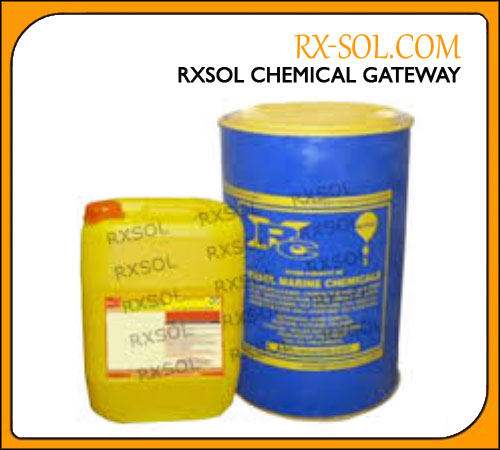
Foam Agent Booster
Part No: RXSOL-22-3020-210
solar bright
Solar Bright Detergent manufacturer, supplier and exporter.
Application
High alkaline emulsion laundry detergent with nonionic surfactants, water conditioners and optical brighteners. Effective on all linen types and soils across a broad range of wash temperatures and water conditions. It has water conditioners and optical brighteners.
Dosage
Product dilution information : 0.1 % - 0.18 %
The dispensing rate is set on-site by a Representative. No adjustment of the dispensing rate can be made except by a Representative. DO NOT use in laundry machines with porcelain-lined or soft metal tubs. DO NOT use on wool, silk or delicate fabrics Linen, table cloths, bar rags, towels
MSDS

| Product Name | : Solar Bright Detergent |
| Part Number | : RXSOL-37-3701-025 |
Company Details:
RX MARINE INTERNATIONAL
105, A wing , BSEL , TECH PARK.
VASHI ,NEW BOMBAY 400703 INDI
| Phone | +91 22 27815540 / 41 / 42 |
| Fax | +91 22 2781 1318 :::AOH :0091 9821214367 |
| 123@rxmarine.com | |
| Website | www.rxmarine.com |

| Name of Substance | Cas Number | Wt.% |
| Sodium Hydroxide | 1310-73-2 | 10 -30 % |
| Poly(oxy-1,2-ethanediyl), a-(2-propylheptyl)-whydroxy | 160875-66-1 | 10 - 30% |
| Alcohol Ethoxylate | 68551-12-2 | 10 - 30% |

| Signal Word | Danger |
| Hazard Statements |
May be corrosive to metals. |
| Precautionary statements - prevention | Keep only in original container. Wash skin thoroughly after handling. Wear protective gloves/ protective clothing/ eye protection/ face protection.. |
| Precautionary statements - response |
IF SWALLOWED: Rinse mouth. Do NOT induce vomiting. IF ON SKIN (or hair): Take off immediately all contaminated clothing. Rinse skin with water/shower. IF INHALED: Remove person to fresh air and keep comfortable for breathing. Immediately call a POISON CENTER or doctor/ physician. IF IN EYES: Rinse cautiously with water for several minutes. Remove contact lenses, if present and easy to do. Continue rinsing. Immediately call a POISON CENTER or doctor/ physician. Wash contaminated clothing before reuse. Absorb spillage to prevent material damage. Storage: Store locked up. Store in corrosive resistant stainless steel container with a resistant inner liner. Disposal: Dispose of contents/ container to an approved waste disposal plant. |

| Eye Contact | Rinse immediately with plenty of water, also under the eyelids, for at least 15 minutes. Remove contact lenses, if present and easy to do. Continue rinsing. Get medical attention immediately. |
| Skin Contact | Wash off immediately with plenty of water for at least 15 minutes. Use a mild soap if available. Wash clothing before reuse. Thoroughly clean shoes before reuse. Get medical attention immediately. |
| Inhalation: | If inhaled, If inhaled, remove to fresh air. If not breathing, give artificial respiration. If breathing is difficult, give oxygen. Call a physician. |
| Ingestion: | If swallowed, do not induce vomiting. Allow victim to rinse his mouth and then to drink 2-4 cupfuls of water. Never give anything by mouth to an unconscious person. Call a physician. |
| Notes to Physicians | Treat symptomatically. |

| Flammability | Non Flammable. |
| Flash Point | Not Determine |
| Suitable extinguishing media | Use extinguishing measures that are appropriate to local circumstances and the surrounding environment. |
| Protective Equipment | Use personal protective equipment. |
| Hazardous combustionproducts |
Decomposition products may include the following materials: Carbon oxides, Nitrogen oxides (NOx) ,Sulfur oxides,Oxides of phosphorus. |
| Advice for firefighters | Wear self-contained breathing apparatus. Wear full protective equipment. |
| Specific extinguishing methods | Fire residues and contaminated fire extinguishing water must be disposed of in accordance with local regulations. In the event of fire and/or explosion do not breathe fumes. |

| Personal precautions, protective equipment and emergency procedures |
Ensure adequate ventilation. Keep people away from and upwind of spill/leak. Avoid inhalation, ingestion and contact with skin and eyes. When workers are facing concentrations above the exposure limit they must use appropriate certified respirators. Ensure clean-up is conducted by trained personnel only. Refer to protective measures listed in sections 7 and 8. |
| Enviromental Precaution | Do not allow contact with soil, surface or ground water. |
|
Methods and materials for containment and cleaning up |
Stop leak if safe to do so. Contain spillage, and then collect with noncombustible absorbent material, (e.g. sand, earth, diatomaceous earth, vermiculite) and place in container for disposal according to local / national regulations (see section 13). Flush away traces with water. For large spills, dike spilled material or otherwise contain material to ensure runoff does not reach a waterway. |

| Advice on safe handling | Do not ingest. Do not get in eyes, on skin, or on clothing. Do not breathe dust/ fume/ gas/ mist/ vapors/ spray. Use only with adequate ventilation. Wash hands thoroughly after handling. |
| Storage | Do not store near acids. Keep out of reach of children. Store in suitable labeled containers. Storage temperature : 10 °C to 50 °C |
| Advice on general occupational hygiene | Wash hands after use. Do not to eat, drink and smoke in work areas. Remove contaminated clothing and protective equipment before entering eating areas. |

| Engineering Control | Effective exhaust ventilation system. Maintain air concentrations below occupational exposure standards. | ||||||||||||||||||||
| Personal Protection |
Eye protection : Wear eye protection/ face protection. Hand protection : Wear the following personal protective equipment: Standard glove type. Gloves should be discarded and replaced if there is any indication of degradation or chemical breakthrough. Skin protection :Personal protective equipment comprising: suitable protective gloves, safety goggles and protective clothing Respiratory protection : When workers are facing concentrations above the exposure limit they must use appropriate certified respirators. |
||||||||||||||||||||
|
Exposure Limits: |
|
||||||||||||||||||||
| Hygiene measures | Handle in accordance with good industrial hygiene and safety practice. Remove and wash contaminated clothing before re-use. Wash face, hands and any exposed skin thoroughly after handling. Provide suitable facilities for quick drenching or flushing of the eyes and body in case of contact or splash hazard. |


Gloves Suit

| Form | Emulsion Liquid |
| Colour | Opaque, yellow |
| Odour | Slight |
| Boiling point and boiling range | 100°C |
| Flash Point | Not applicable, Does not sustain combustion. |
| Freezing Point | No Data Available |
| pH | 13.0 - 14.0, 100 % |
| Evaporation rate | No data available |
| Flammability (solid, gas) | No data available |
| Upper explosion limit | No data available |
| Lower explosion limit | No data available |
| Explosive properties | No data available |
| Vapor pressure | No data available |
| Relative vapor density | No data available |
| Relative density | 1.207 - 1.275 |
| Water solubility | Soluble |
| Solubility in other solvents | No data available |
| Partition coefficient: octanol | No data available |
| Autoignition temperature | No data available |
| Thermal decomposition | No data available |
| Viscosity, kinematic | 2,018.131 mm2/s (40 °C) |
| Explosive properties | No data available |
| Oxidizing properties | No data available |
| Molecular weight | No data available |
| VOC | No data available |

| Recativity | None |
| Stability | Stable under normal conditions. |
| Possibility of hazardous reactions | No dangerous reaction known under conditions of normal use. |
| Incompatible materials |
Acids Metals Organic materials |
| Hazardous Decomposition |
Decomposition products may include the following materials: |
| Condition to Avoid | None Known |
| Polymerization | Will not occur. |

|
Route of Exposure |
Inhalation, Eye contact, Skin contact Potential Health Effects |
| Eyes |
Causes serious eye damage. |
| Skin | Causes severe skin burns. |
| Ingestion | Causes digestive tract burns |
| Inhalation | May cause nose, throat, and lung irritation. |
| Chronic Exposure | Health injuries are not known or expected under normal use. |
| Acute oral toxicity | Acute toxicity estimate : > 5,000 mg/kg |
| Acute inhalation toxicity | No data available |
| Acute dermal toxicity | No data available |
| Skin corrosion/irritation | Causes severe burns |
| Serious eye damage/ irritation | Irreversible effects on the eye |
| Respiratory / skin sensitization | No data available |
| Carcinogenicity | No data available |
| Reproductive effects | No data available |
| Germ cell mutagenicity | No data available |
| Teratogenicity | No data available |
| STOT-single exposure | No data available |
| Aspiration toxicity | No data available |
| Acute dermal toxicity | Alcohol ethoxylate LD50 Rabbit: > 2,000 mg/kg |

| Environmental Effects | Harmful to aquatic life |
| Toxicity to fish | No data available |
| Toxicity to daphnia and others | No data available |
| Toxicity to algae | No data available |
| Toxicity to fish |
Alcohol Ethoxylate |
|
Toxicity to daphnia and other aquatic invertebrates |
Sodium Hydroxide 48 h EC50: 40 mg/l poly(oxy-1,2-ethanediyl), a-(2-propylheptyl)-w-hydroxy 48 h EC50 Daphnia: 10 mg/l |
| Persistence and degradability | No data available |
| Bioaccumulative potential | No data available |
| Mobility in soil | No data available |
| Mobility in soil | No data available |

| Remarks | Please consider the relevant national or regional provisions. Waste shall be separated into the categories that can be handled separately by the local or national waste management facilities. |
| Waste Disposal | The product should not be allowed to enter drains, water courses or the soil. Where possible recycling is preferred to disposal or incineration. If recycling is not practicable, dispose of in compliance with local regulations. Dispose of wastes in an approved waste disposal facility |

The shipper/consignor/sender is responsible to ensure that the packaging, labeling, and markings are in compliance with the selected mode of
transport.
Land transport (DOT)
| UN Number | 1824 |
| Proper shipping name | Sodium hydroxide solution |
| Class | 8 |
| Packing Group | II |
| Environmentally hazardous | No |
International Maritime Dangerous Goods Code (IMDG) : Not Regulated
| UN Number | 1824 |
| Proper shipping name | Sodium hydroxide solution |
| Class | 8 |
| Packing Group | II |
| Environmentally hazardous | No |
| Marine Pollutant | No |

| SARA 304 Extremely Hazardous Substances Reportable Quantity | This material does not contain any components with a section 304 EHS RQ. |
| SARA 311/312 Hazards | Acute Health Hazard |
| SARA 302 | No chemicals in this material are subject to the reporting requirements of SARA Title III, Section 302. |
| SARA 313 | This material does not contain any chemical components with known CAS numbers that exceed the threshold (De Minimis) reporting levels established by SARA Title III, Section 313. |
| HMIS | |
| Health Hazard | : 3 |
| Fire Hazard | : 0 |
| Reactivity | : 0 |
| Personal Protection | : H |
| Fire : | |
| Health Hazard | : 3 |
| Fire Hazard | : 0 |
| Reactivity | : 0 |
| Specific Hazard | : 0 |

| Other Information |
The information above is believed to be accurate and represents the best information currently available to us. However, we make no warranty of merchantability or any other warranty, express or implied, with respect to such information, and we assume no liability resulting from its use. Users should make their own investigations to determine the suitability of the information for their particular purposes. In no event shall be liable for any claims, losses, or damages of any third party or for lost profits or any special, indirect, incidental, consequential or exemplary damages, howsoever arising, even if Rx Marine International has been advised of the possibility of such damages. |