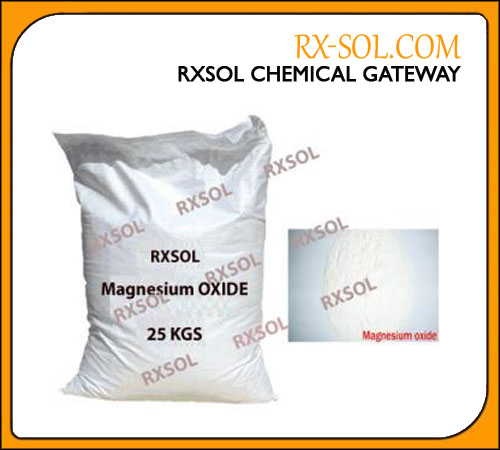
Magnesium OXIDE

Size:

Color:

Product Short Description: Magnesium-Oxide is widely used in food and agriculture industries. Magnesium sulfate is highly soluble in water. The anhydrous form is strongly hygroscopic, and can be used as a desiccant.
Images: Alt


Sodium Meta Bi Sulfite Liq

Size:

Color:

Product Short Description: Used as a disinfectant, antioxidant and preservative agent. It is used as a cleaning agent for potable water reverse osmosis membranes in desalination systems. It is also used to remove chloramine from drinking water after treatment. Also used in printing and dyeing and dechlorination of textile a
Images: Alt


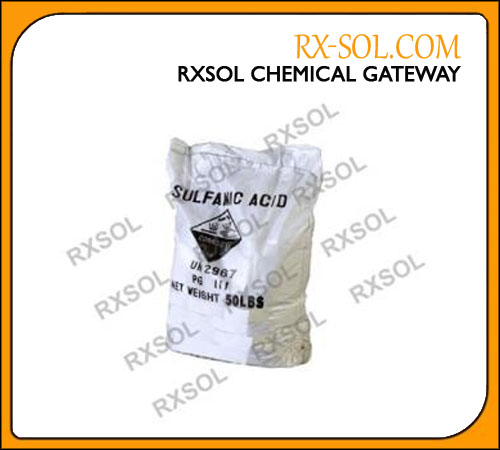
Sulfamic Acid Descaler Cleaner

Size:

Color:

Product Short Description: Sulphamic acid can be used for removing scales obtained from water in heating and cooling systems e.g. boilers, condensers, heat exchangers, jackets and coils
Images: Alt
Get MSDS
Get Technical Bulletin
Connect On Whats App


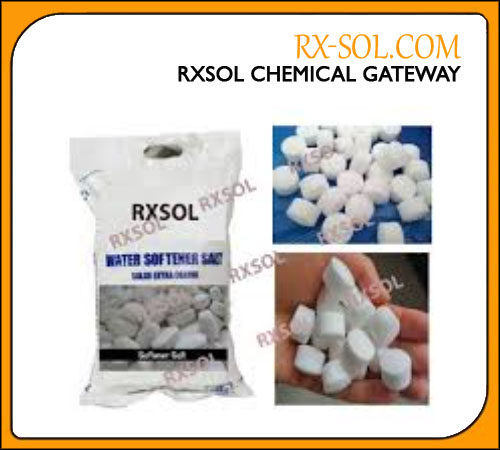
Salt Tablets

Size:

Color:

Product Short Description: Sodium Chloride water softner TABLETS
Images: Alt
Get MSDS
Get Technical Bulletin
Connect On Whats App


Feed Water for Boiler

Size:

Color:

Product Short Description: PURITY - 97.30 % Chloride content >2 to <5 ppm [ packed in HMHDPE BARREL 210 Ltrs standard packing ]
Images: Alt
Get MSDS
Get Technical Bulletin
Connect On Whats App


Morpholine 10% Solution

Size:

Color:

Product Short Description: 10% Solution can be use as Coating Auxiliary Agents, Plastic Auxiliary Agents, Rubber Auxiliary Agents, Surfactants, Textile Auxiliary Agents, Water Treatment Chemicals
Images: Alt
Get MSDS
Get Technical Bulletin
Connect On Whats App


Oxytreat Scavanger Plus 210 Ltr

Size:

Color:

Product Short Description: Oxygen Scavenger Plus is a catalysed liquid solution of Hydrazine and diethylhydroxylamine (DEHA). Its volatile properties ensure distribution throughout the boiler and condensate system, and hence protects against oxygen corrosion in all parts of t
Product Technical Specification:


Product Specifications:

Density 

1

Packing, Type

PLASTIC

Volume

25 l

pH

10.5

Colour 

LIGHT YELLOW

Appearance

LIQUID

Directions for use
This product is formulated for use in conjunction.Oxygen Scavenger Plus can be used in any boiler system, and in conjunction with mechanical deaeration systems. Removal of dissolved oxygen is vital for prevention of corrosion and especially pitting corrosion in boilers. When dosed into a boiler system, Oxygen Scavenger Plus will react with dissolved oxygen and form non corrosive compounds. The product is volatile, and left over product from oxygen scavenging in the pre-boiler section will evaporate and assist protection of the steam and condensate system. No solid materials are produced when using Oxygen Scavenger Plus.
 

Dosing method
Rx Marine International recommends continuously into the boiler feed line and Boiler Water Treatment Dosing Unit.
Dosing should be controlled so that the DEHA residual in the condensate is between 0.08-0,30 ppm. The consumption will depend on feed water temperature and the amount of water fed into the boiler. For more information about initial dosage and dose rate please consult your nearest Customer Centre.
Test result condensate PPM DEHA   
0.00 - 0.08 0.08 - 0.30 0.30 +
Increase dose 25% Maintain dose Decrease dose 25%

Sampling and testing
A representative sample of Condensate should be drawn for analysis daily. The sample should always be taken from the same sampling point, cooled and tested immediately By Rxsol Test Kit. It is important that regular testing is carried out, to ensure the correct level of treatment is maintained.
 

Features
• Fast acting, liquid oxygen scavenger.
• Safe and easy to use, low toxicity.
• Reduces corrosion of iron and copper, increasing system life and reliability.
• Neutralises acids occurring in condensate system.
• Volatile product, provides distribution and protection throughout the boiler system, economical in use.
• Suitable for use in conjunction with combined and co-ordinated treatment programmes.
• Organic product, no dissolved solids added.
• Simple test to determine treatment level. 

Remarks:

The establishment of protective metal oxide lay-ers through the use of reducing agents (such as hydrazine, hydroquinone, and other oxygen scavengers) is known as metal passivation or metal conditioning. Although "metal passivation" refers to the direct reaction of the compound with the metal oxide and "metal conditioning" more broadly refers to the promotion of a protective surface, the two terms are frequently used interchangeably.

The reaction of hydrazine and hydroquinone, which leads to the passivation of iron-based metals, proceeds according to the following reactions:

N2H4 6Fe2O3 ® 4Fe3O4 2H2 N2
hydrazine    hematite    magnetite    water    nitrogen


C6H4(OH)2 + 3Fe2O3 ® 2Fe3O4 + C6H4O2 + H2O
hydroquinone   hematite   magnetite   benzoquinone   water


Similar reactions occur with copper-based metals:

N2H4 + 4CuO ® 2Cu2O + 2H2O + N2
hydrazine   cupric oxide   cuprous oxide   water   nitrogen


C6H6O2 + 2CuO ® Cu2O + C6H4O2 + H2O
hydroquinone   cupric oxide   cuprous oxide   benzoquinone   water


Magnetite and cuprous oxide form protective films on the metal surface. Because these oxides are formed under reducing conditions, removal of the dissolved oxygen from boiler feedwater and condensate promotes their formation. The effective application of oxygen scavengers indirectly leads to passivated metal surfaces and less metal oxide transport to the boiler whether or not the scavenger reacts directly with the metal surface.

A significant reduction in feedwater oxygen and metal oxides can occur with proper application of oxygen scavengers.

Images: Alt
Get MSDS
Get Technical Bulletin
Connect On Whats App


pH Booster Morpholine Base

Size:

Color:

Product Short Description: RXSOL pH Boosters are morpholine based alkaline formulation,used as alkalinity source for boiler feed water. It is synergized with properties of pH boosting and water conditioning.
Product Technical Specification:


Properties Unit Typical Value
Form and Appearance - Clear Colorless Liquid
Odor - Characteristic
pH (neat) pH Alkaline
Solubility - Completely Soluble in Water
Remarks:

STORAGE & HANDLING

pH booster should be stored in an air tight container away from direct heat.
Always store at cool & dry place.
Handle using goggles & do not breathe in the vapours.
Wash thoroughly in case of contact. Do not swallow.


pH Control

Maintenance of proper pH throughout the boiler feedwater, boiler, and condensate systems is essential for corrosion control. Most low-pressure boiler system operators monitor boiler water alkalinity because it correlates very closely with pH, while most feedwater, condensate, and high-pressure boiler water requires direct monitoring of pH. Control of pH is important for the following reasons:

  • corrosion rates of metals used in boiler systems are sensitive to variations in pH
  • low pH or insufficient alkalinity can result in corrosive acidic attack
  • high pH or excess alkalinity can result in caustic gouging/cracking and foaming, with resultant carryover
  • speed of oxygen scavenging reactions is highly dependent on pH levels

The pH or alkalinity level maintained in a boiler system depends on many factors, such as sys-tem pressure, system metals, feedwater quality, and type of chemical treatment applied.

The corrosion rate of carbon steel at feedwater temperatures approaches a minimum value in the pH range of 9.2-9.6 . It is important to monitor the feedwater system for corrosion by means of iron and copper testing. For systems with sodium zeolite or hot lime softened makeup, pH adjustment may not be necessary. In systems that use deionized water makeup, small amounts of caustic soda or neutralizing amines, such as morpholine and cyclohexylamine, can be used.

In the boiler, either high or low pH increases the corrosion rates of mild steelThe pH or alkalinity that is maintained depends on the pressure, makeup water characteristics, chemical treatment, and other factors specific to the system.

The best pH for protection of copper alloys is somewhat lower than the optimum level for carbon steel. For systems that contain both metals, the condensate and feedwater pH is often maintained between 8.8 and 9.2 for corrosion protection of both metals. The optimum pH varies from system to system and depends on many factors, including the alloy used 

To elevate pH, neutralizing amines should be used instead of ammonia, which (especially in the presence of oxygen) accelerates copper alloy corrosion rates. Also, amines form protective films on copper oxide surfaces that inhibit corrosion.

Images: Alt
Get MSDS
Get Technical Bulletin
Connect On Whats App


Sodium Chlorite Solution

Size:

Color:

Product Short Description: SodiumChlorite is also used for water treatment purpose.
Product Technical Specification:
(31% Active Sodium Chlorite)  
 
Product 
 
SODIUM CHLORITE SOLUTION  31%
Molecular Weight 90.438 g/mol
Appearance Light Greenish Colour Solution
Specific Gravity 1.21-1.24
ph 12 - 13
Sodium Chlorite% 25 (+/-1)%
Packing HDPE Carbouys 50/60 Kgs.
HDPE Barrels 250 Kgs.
1000 liters IBC 
Remarks:
Images: Alt
Get MSDS
Get Technical Bulletin
Connect On Whats App


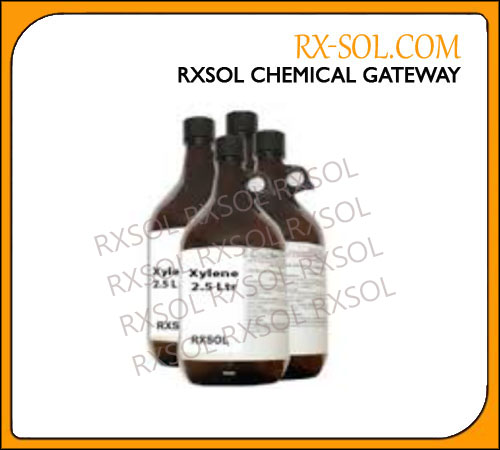
Xylene AR reagent

Size:

Color:

Product Short Description: Xylene analar reagent grade for oil, Scale Composition tests, metering operations.
Product Technical Specification:

XYLENE ANALAR,2.5LTR

Remarks:
Images: Alt